How Do Bees Make Honey
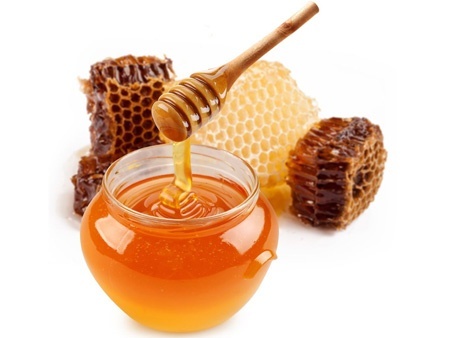
What Is Honey,Honey is a sweet liquid produced by bees. Bees make honey by use the nectar of flowers and plants as food. During the blossoming and flowering season of plants and trees, bees collect the nectar and pollen of flowers and blossoms by sucking through their nostrils, then take it to the honey bag in their abdomen and after several known and unknown chemical reactions, they are decomposed into simple sugars and converted into a fragrant, sweet, tonic, cheerful liquid and stored in wax-shaped cells that have already been made inside the honeycomb. The design of the honeycomb and the constant fluttering of the bees’ wings evaporate and create a sweet honey liquid
Beekeepers collect honeycomb frames and shave the wax caps that bees make to seal honey in each cell. After removing the caps, the frames are placed in an extraction machine, a centrifuge that spins and removes honey from the frame, and after extracting the honey, they sift the honey to remove residual wax and other particles
How honey production by bees and pollination effects on agricultural products
Bees also pollinate for plants when collecting flower nectar. This is an advantage for agriculture and adds value to agricultural products. The act of bee pollination ensures that we provide globally healthy food. In addition to pollination, bees are kept by many farmers as essential livestock, they give them various products including honey, royal jelly, wax, pollen, propolis, bee venom, and even mineral vegetables
Different ways of honey production, how do bees make honey
We can have honey as many flowers as we have in the world; there is a lot of variety in honey, so the taste, aroma and color of honey varies depending on the type of flower and nectar that the bees feed on, and the belief that dark honey is better than light honey is completely wrong. For example, the honey made from the nectar of orange blossoms may be light in color, while honey from avocados or wildflowers may be dark amber
Natural honey produced by bees in the wild can be organic or inorganic. This means that any organic honey is definitely natural, but on the contrary, any natural honey cannot be organic.
Organic beekeeping and organic honey production methods
- Organic honey is produced directly and completely by bees, and humans do not interfere in bee nutrition, they are packed and supplied according to existing laws, instructions and standards
- Bees collect nectar from the flowers and blossoms of plants that have been cultivated without using pesticides, toxins, chemical fertilizers, and genetically modified compounds, and after processing, turn it into honey
- The next important factor is not to use chemical drugs and antibiotics to treat bee colony
- Organic honey is low in sucrose and has high diastasis in terms of nectar and honey. Also, HMF hydroxymethyl furfural is negative in these honeys and also the rest of chemical drugs and antibiotics are not present in these honeys
- In the production of organic honey, bees feed only on the nectar of flowers. Organic beekeeping means regular and timely migration of bees due to the change of seasons to flower areas, so that bees have access to flowers for feeding. Therefore, no artificial nutrition such as sugar is given to the bee. A knowledgeable and professional beekeeper regularly moves his bees to flower-filled areas
- To produce a high-quality organic honey, the hive structure needs to be free of chemicals and synthetics. Wooden hives are the best option. Unfortunately, today the use of plastic hives has become popular in the beekeeping industry due to its easier transportation. This threatens and challenges the health of honey and organically produced honey
- Packaging is another important issue that plays a role in the organicity of honey because honey due to its acidic properties may enter into chemical reactions with plastic containers, so it is better to use suitable glass containers to store honey rather than plastic and others
- The importance of organic honey is in the health of the product and its desirable and natural quality, which provides consumer satisfaction
Natural honey
Natural honey is the one that is produced by bees with little human cooperation. In this method, the main diet of bees is the nectar of flowers and blossoms in the flowering seasons of plants. Only in the cold season when flowers and plants are not available for bee feeding, beekeepers and natural honey producers give sugar to bees, which is only used for bee survival and not for honey production. Natural honey contains sucrose, diastase and HMF as standard. In fact, natural honey is honey produced by bees in wooden or basket hives
Nutritional honey
Nutritional honey is a type of honey that is produced by bees, but instead of feeding bees with the nectar of flowers and plants, sugar is given to bees by humans, and bees feed on sugar or syrup and produce honey. Slow and brief chemical interactions that take place in the body of bees enters water and sugar. Nutritional honey has a high amount of sucrose due to the feeding of bees with sugar. Nutritional honey may be (with wax) but still has a high percentage of sucrose, which indicates that this honey is not good. Although nutritional honey is not an excellent honey, since it has entered the body of the bee and diastatic interactions have taken place on it; It has some properties of honey
Counterfeit or industrial honey
Counterfeit honey or artificial and industrial honey is similar to honey in appearance, but it is not honey at all and it can be easily proven to be counterfeit in the laboratory. Rather, it is a concentrated syrup of sugar, which turns red and is sold instead of honey. Counterfeit or industrial honey is made entirely by humans from commercial glucose, sugar etc., and bees play no role in producing this substance
This substance is produced by heating the concentrated sugar syrup and adding special acids and dyes. It is similar to honey in terms of firmness, appearance and sweetness. Counterfeit honeys have a very high percentage of sucrose and do not have diastase, and the aroma of natural honey also. These “honey-like” do not harden (solid) and if it hardens, it becomes sugary, and when it is eaten, large grains of sugar are placed between the teeth and give the sound of sugar completely. Counterfeit honey is very harmful to human health. These ” honey-like ” substances have a very low price
High nutritional value, useful compounds and importance
of consumption of honey
There is nothing more natural, purer, healthier, cleaner and sweeter than honey, honey has beneficial effects on our body and is a biologically active product that has rich and complex compounds
The exact composition of honey depends on the flowers that the bees feed on. Everything in this product is essential and useful for human health. There are more than 300 substances in honey that positively affect the body’s metabolic process
Natural honey is a type of unprocessed sugar that, due to its monosaccharides, fructose and glucose, contains about 70 to 80% of simple sugars, and about 20% of complex sugars. Honey also contains dextrin and starch fiber. This compound helps regulate blood sugar levels. So it is one of the best natural sweeteners that provides natural energy through the form of carbohydrates and is a great substitute for sugar that can be used to eliminate sugar from your diet
Although the chemical structure of honey contains simple sugars, but this structure is completely different from the composition of white sugar, there is much talk about the negative effects of white sugar on the body. Researches have shown that honey contains a variety of phytochemicals, as well as other substances such as organic acids, vitamins and enzymes that may act as sources of dietary antioxidants
Different kinds of useful ingredients in natural honey
Different kinds of sugars include
fructose 38% – glucose 31% – dextrin 5% – sucrose 1 to 5% – protein 2 to 3% – minerals 0.2% – conventional water 16 to 18%
Salt of organic acids
0.003 to 0.2% (malic, lactic, sulfuric, citric and tartaric acids)
Minerals
(chromium, chlorine, iron, phosphorus, magnesium, manganese, selenium, silica, sodium, zinc, calcium, copper, sulfur, potassium)
Enzymes
Substances that significantly speed up the metabolic process in very small amounts.
Vitamins
in very small amounts (B1, B2, B3, B5, B6, H, K, C, E, PP, Provitamin A)
The main polyphenols
flavonoids, (caffeic acids, protocatecoic, valenical and gallic) In fact, flavonoids and polyphenols are the two main biologically active molecules that act as antioxidants.
One tablespoon of honey contains about 64 grams of calories, 3.17 grams of sugar and has no fiber, no cholesterol. Natural honey with acidic pH level has antioxidant, antiseptic and antibacterial properties that help reduce bacterial growth. Modern medical science tries to use the properties of natural honey to heal chronic and infectious wounds.
Tagged bee honey, beehive, Bees make honey, Do bees get killed for honey?, Export honey production, honey bees make honey, How Bees Make Honey, How do bees make honey, How do bees make honey step by step?, how do bees make honey?, How does a bee turn nectar into honey?, Is honey bee vomit?, Natural honey production, Production of natural organic honey, Why Do Honey Bees Make Honey, Why does a bee produce honey, Why does a bee produce honey?




Here are some of the internet sites we recommend for our visitors. Spencer Mcrea
thank you
Utterly indited written content , regards for information. Carol Rotkowski
thanks dear Carol Rotkowski for your attention
Some genuinely good blog posts on this site, appreciate it for contribution. Reyes Teem
thank you for taking the time to read.
thanks dear Everett Happer for your time , and i’m happy that you liked the content.
This is a unquestionably interesting post. You are doing spout with writing. Wilfred Guzowski
thanks dear Wilfred Guzowski, for your good comment.
Some really great info , Gladiolus I detected this. Ralph Tohill
thanks dear Ralph Tohill, for your time & attention that spend. I’m so happy for your satisfied.
Thank you ever so for you article. Much thanks again. Awesome. Murray Sarnosky
Dear Murray Sarnosky ,thank you very much for your good energy .
Wow, great article post. Thanks Again. Keep writing. Jarrett Gagliardotto
Dear Jarrett Gagliardotto, Glad you liked it .
Some genuinely good information, Gladiolus I noticed this. Bernard Serabia
Dear Bernard Sarabia thanks for your time
The best content we’ve seen lately, thank you admin.
Dear friend, thank you for your kind comment.
Hi! I realize this is kind of off-topic however I needed to ask. Ahmed Kearin
Hi
Thank you dear Ahmad Kirin, for your opinion